653

autor
infoConstruct
distribuie


publicat
2026 March 04
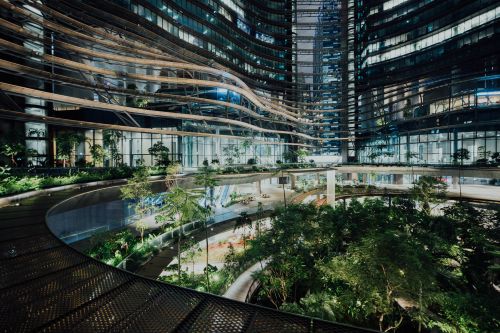
Rapid changes in the economy, increased population mobility and transformations in the labor market are driving the emergence of a new concept in architecture and construction: adaptable buildings. These structures are designed so that they can change their function within a relatively short period of time, without major structural interventions, shifting from office spaces to residential units, hotels or commercial facilities.
The concept emerges as a response to one of the major challenges of the real estate sector: the functional lifespan of buildings. In many cases, the purpose of a building becomes outdated before its structure reaches its technical limit. For example, the decline in demand for office spaces in certain urban areas, accelerated after the pandemic period, has led developers to seek solutions for the rapid conversion of these spaces into residential units or hotels.
Adaptable buildings are designed from the conceptual stage to allow such transformations. Key elements include modular load-bearing structures, large-span floor plates, flexible technical installations and easily reconfigurable interior partitions. In many cases, technical infrastructure—such as water, ventilation or electrical networks—is designed to support multiple types of use.
Another important factor is the use of prefabricated construction systems and architectural modules, which allow rapid reconfiguration of interior spaces. Movable walls, centralized technical cores and adaptable façade systems contribute to the rapid transformation of a building’s function without major demolition or reconstruction works.
Beyond economic advantages, adaptable buildings also offer significant benefits in terms of sustainability. The ability to modify the use of a building reduces the need for demolition and reconstruction, which means lower material consumption and a significant reduction in the carbon footprint of the construction sector.
Major cities in Europe and North America are already seeing projects that adopt this architectural model, integrating functional flexibility into the design concept. In the future, amid accelerated urbanization and rapid economic change, adaptable buildings could become a standard for modern real estate developments, offering investors and cities an efficient solution for managing uncertainty in the real estate market.
(Photo: Freepik)
aflat
read