841

autor
infoConstruct
distribuie


publicat
2026 May 12
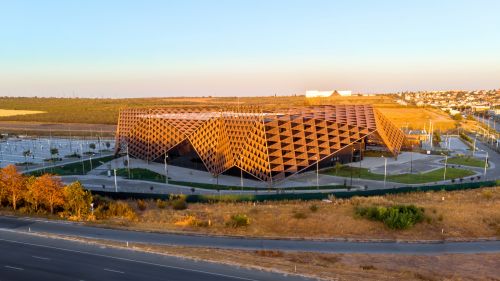
Heat waves are becoming increasingly frequent across Europe, and cities are among the most affected areas. In Romania, the extreme summers of recent years are bringing to the forefront a long-ignored issue: buildings are not designed for high temperatures.
The concept of a “heat-resilient building” is beginning to gain relevance in architecture and construction. It involves the use of passive solutions that reduce the need for artificial cooling: proper building orientation, façade shading, natural ventilation, and materials with high thermal inertia.
Reflective roofs and ventilated façades are already being used in some modern projects, helping to reduce the urban heat island effect. In addition, the integration of green spaces — from green roofs to urban vegetation — is becoming an important component of climate adaptation strategies.
For developers, the challenge is twofold: rising initial costs and the lack of clear regulations. Nevertheless, climate pressure and growing demand from users could accelerate the adoption of these solutions.
In Romania, most existing buildings are not prepared for extreme temperatures, while dependence on air conditioning generates high energy consumption. In this context, heat-adapted design is becoming not just an option, but a necessity.
In the medium term, construction standards could evolve to include thermal comfort criteria for the warm season, not only energy efficiency during winter. As a result, heat-resilient buildings could become the new benchmark in urban development.
(Photo: Magnific)
aflat
read