648

autor
infoConstruct
distribuie


publicat
2026 May 05
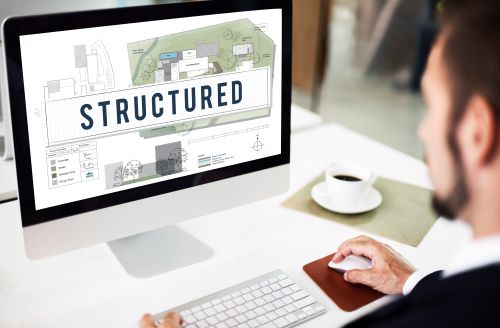
The construction industry is beginning to adopt models in which the project is no longer fully defined before execution. Generative design, supported by artificial intelligence and parametric modeling, allows the development of solutions that evolve in real time, based on data from the field.
The technology is not experimental. Companies such as Autodesk and Dassault Systèmes already use generative algorithms in the design of complex structures. According to a McKinsey report (2023), the use of generative design can reduce design costs by up to 20% and material usage by 15–30%, through the optimization of structural forms.
In practice, this model involves integrating BIM (Building Information Modeling) with optimization algorithms. Parameters such as material strength, environmental conditions, and costs are introduced into the system, and the final solution is generated iteratively, sometimes even during execution.
The major advantage is flexibility. The project can be adapted according to on-site realities, reducing errors and unforeseen costs. At the same time, it enables more efficient use of materials and a reduction in carbon footprint.
However, there are significant limitations. Current regulations are built around a fixed project, and the validation of dynamically generated solutions is difficult to fit into existing legal frameworks. In addition, technical responsibility becomes harder to assign in the case of algorithm-generated design.
Construction without a fixed project does not eliminate the role of the engineer, but transforms it. The decision is no longer solely about design, but about defining the parameters within which the algorithm operates.
(Photo: Magnific)
aflat
read