623

autor
infoConstruct
distribuie


publicat
2026 April 29

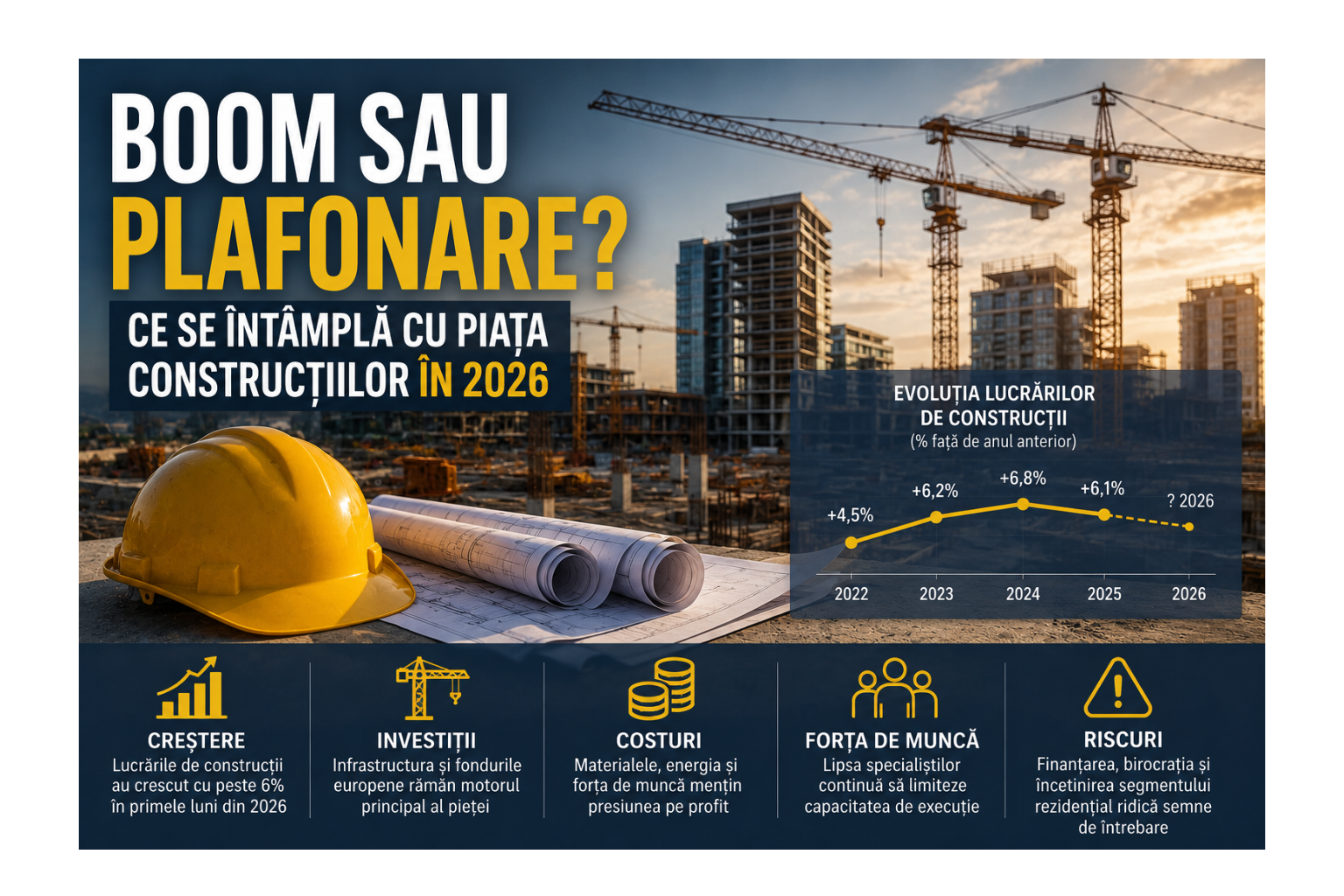
The construction industry has projects, European funding, and strong demand. What it no longer has is workforce.
According to data from the National Institute of Statistics (INS), the construction sector has remained one of the main contributors to Romania’s GDP in recent years, supported by infrastructure projects and public investments.
At the same time, however, the shortage of skilled labor is becoming critical.
Data from the General Inspectorate for Immigration shows that Romania has approved record quotas in recent years for non-EU workers, reaching over 100,000 work permits annually, a significant share of which are directed toward construction.
Most workers come from Nepal, Sri Lanka, Bangladesh, Pakistan, and Vietnam.
The problem is that even this influx no longer covers the actual demand.
Construction companies report shortages in key segments: steel fixers, welders, electricians, plumbers, and machinery operators.
Wages have increased rapidly.
In construction, the average net salary has exceeded RON 5,000 per month in many specialized roles, according to INS.
However, many Romanian workers continue to leave for Germany, Belgium, or the Netherlands, where earnings are several times higher.
The result: project delays, rising costs, and significant pressure on developers.
(Photo: Magnific)
aflat
read