926

autor
infoConstruct
distribuie


publicat
2026 May 14
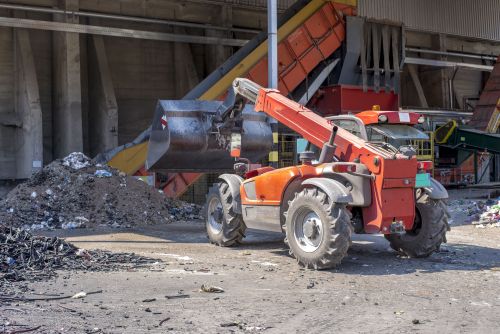
The construction industry is beginning to fundamentally change the way it approaches waste. In a sector responsible for enormous volumes of resource consumption and carbon emissions, the reuse of materials recovered from demolitions is becoming one of the most important directions of the European circular economy.
Traditionally, demolished buildings generated massive quantities of debris transported to landfills or used as low-value filling material. Today, however, climate pressure and rising raw material costs are pushing companies to treat demolitions as an important source of reusable resources.
Crushed concrete is already being used in many European countries as recycled aggregate for road infrastructure and foundation works. At the same time, steel recovered from buildings is becoming extremely valuable, given that steel production remains one of the largest industrial sources of carbon emissions.
An increasing number of projects are also attempting to recover materials that until recently were considered impossible to reuse: bricks, structural timber, metal panels, glass, and architectural elements. In some cases, components are selectively dismantled before demolition itself in order to be reintegrated into other projects.
The concept of “urban mining” — treating existing buildings as sources of materials — is gaining momentum in major European cities. Old buildings are increasingly viewed as temporary resource reservoirs, not merely as structures destined for demolition.
The European Union is accelerating this transition through targets related to construction waste recycling and new climate policies aimed at reducing emissions generated by materials. In addition, rising costs for cement, steel, and energy are making reuse increasingly attractive from an economic perspective.
However, significant obstacles remain. The standardization of recycled materials, quality certification, and the lack of logistical infrastructure for collection and sorting continue to limit market development. Moreover, many real estate projects are still designed without considering the future reuse potential of their components.
In Romania, the reuse of demolition materials remains modest compared to Western Europe, but interest is beginning to grow, particularly in large commercial and industrial projects. Cost pressures and new European standards could accelerate the adoption of circular practices within the local market as well.
In the long term, the circular economy could radically transform the construction sector. Instead of the traditional “extract-build-demolish” model, the future of the industry appears to be moving toward buildings designed for reuse, recovery, and the continuous reintegration of materials.
(Photo: Magnific)
aflat
read