697

autor
infoConstruct
distribuie


publicat
2026 April 09
There is a discreet, yet constant reality in construction.
Spaces are not used as they were designed.
Not because the project is wrong.
But because life is not standard.
A living room becomes an office. A transition area becomes storage space. A multifunctional room becomes permanently used for a single purpose.
Adaptation occurs naturally.
But it says something important.
The design was correct in theory. Incomplete in practice.
Differences in lifestyles cannot be perfectly integrated into a standard model.
Different families. Different rhythms. Different needs.
Standardization provides efficiency.
But it limits flexibility.
In this context, the user becomes a co-designer. They adjust, modify, reinterpret the space according to real needs.
This adaptation is not a problem.
But it is a signal.
A signal that design can no longer be only about dimensions and functions.
But about usage scenarios.
For developers, the difference will no longer be made by surface area or price.
But by the degree to which the space allows adaptation.
Because a rigid space is quickly exhausted.
A flexible space evolves.
In the end, a home is not defined by how it looks at delivery.
But by how well it manages to remain relevant over time.
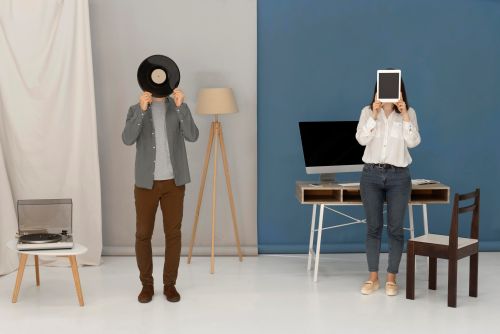
(Photo: Freepik)
aflat
read