905

autor
infoConstruct
distribuie


publicat
2026 March 06
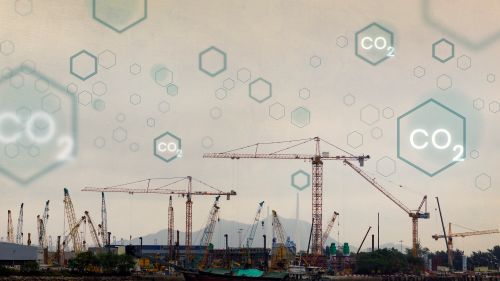
The cement and concrete industry is among the largest industrial emitters of carbon dioxide worldwide. Cement production alone accounts for approximately 7–8% of global CO₂ emissions, creating increasing pressure to develop construction materials with a lower climate impact. In this context, research is focusing on innovative solutions, including concrete capable of capturing and storing carbon dioxide.
The concept is based on the process of mineral carbonation, through which carbon dioxide reacts with mineral compounds in concrete to form stable calcium carbonate. This process can occur naturally over the lifetime of concrete, but new technologies aim to accelerate the phenomenon by integrating CO₂ in a controlled manner into the production process.
In certain industrial technologies, carbon dioxide captured from industrial sources is injected into the fresh concrete mixture. The resulting chemical reaction forms calcium carbonate crystals that remain permanently integrated into the structure of the material. In addition to storing carbon, these reactions can also improve certain mechanical properties of the concrete.
Another direction of research involves the use of alternative materials to traditional cement, such as industrial slag or fly ash, which can react more efficiently with CO₂. By combining these materials with carbon capture technologies, the construction industry is attempting to develop a production model in which concrete becomes a material capable of storing carbon over the long term.
The potential impact of these technologies is considerable. Given the global scale of concrete production, even a modest reduction in emissions or a limited carbon capture capacity could contribute significantly to climate objectives.
Although many of these technologies are still in development or pilot implementation stages, the rapid evolution of research suggests that CO₂-capturing concrete could become one of the key solutions for decarbonizing the construction sector.
(Photo: Freepik)
aflat
read