949

autor
infoConstruct
distribuie


publicat
2025 December 19
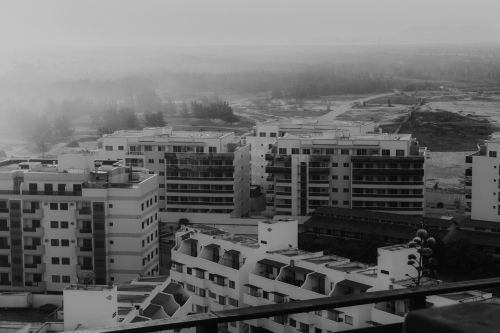
The aging of a building is not a random process and does not depend, as is often believed, on the building’s age or its architectural appearance. From a technical standpoint, there are types of constructions that, even when relatively new, exhibit accelerated degradation due to design, execution, or operational decisions.
A first example is represented by buildings with structures undersized in terms of durability, not structural strength. Concrete produced at the minimum permitted strength classes, insufficient reinforcement cover, and the absence of treatments for aggressive environments lead to early carbonation and corrosion, sometimes visible after only a few years.
Another problematic category is construction based on incompatible systems: thermal insulation that does not allow vapor diffusion, rigid finishes applied on deformable substrates, or improper combinations of traditional materials with modern systems. These buildings “age” through cracking, detachment, and functional deterioration rather than structural failure.
Buildings erected rapidly, with exclusive emphasis on completion deadlines, represent a third frequent case. Rushed execution affects concrete curing, sealing works, flatness, and layer continuity, which later translates into water infiltration, energy losses, and repeated interventions.
Last but not least, poorly operated buildings age at an accelerated pace. Lack of maintenance, uncontrolled modifications, and uses that differ from the original design lead to degradation that cannot be attributed to “age.”
A building ages poorly when it is designed only for handover, not for life.
(Photo: Freepik)
aflat
read