832

autor
infoConstruct
distribuie


publicat
2026 February 24
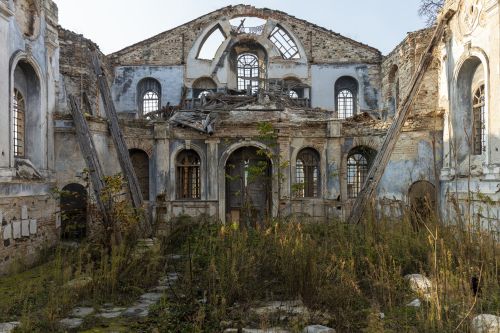
Romania has thousands of hectares of decommissioned industrial platforms, former factories, warehouses, and logistics spaces left unused after the restructuring of the 1990s–2000s. According to data from the European Environment Agency, the “brownfield” phenomenon is common in Central and Eastern Europe, where economic transition has left behind a significant volume of underutilized industrial assets.
In Romania, many of these buildings are strategically located: close to urban centers, railway infrastructure, or major road arteries. The issue is not location, but the lack of investment for reconversion and legal uncertainty regarding ownership.
European data show that brownfield regeneration reduces pressure on agricultural land and limits uncontrolled urban sprawl. The European Commission actively supports the reuse of industrial land through sustainable development policies and structural funds.
Industrial reconversion involves additional costs: environmental assessments, decontamination, and structural consolidation. However, in many cases, existing infrastructure (networks, access, utilities) lowers the total investment compared to greenfield development.
Examples across Europe demonstrate that former industrial areas can become logistics hubs, technology parks, or mixed residential-business spaces. In Romania, cities such as Cluj-Napoca, Timișoara, and Oradea have already begun reconversion processes, transforming former industrial platforms into productive or commercial zones.
From an economic perspective, these assets represent “locked capital.” Reactivating them would generate added value, jobs, and tax revenues, while simultaneously reducing pressure on urban expansion.
The question for 2026 is not whether the potential exists, but whether public authorities and the private sector can accelerate reconversion mechanisms. In an economy where land costs are steadily increasing, brownfield sites are no longer merely an urban planning issue, but a strategic opportunity.
(Photo: Freepik)
aflat
read