702

autor
infoConstruct
distribuie


publicat
2026 February 18
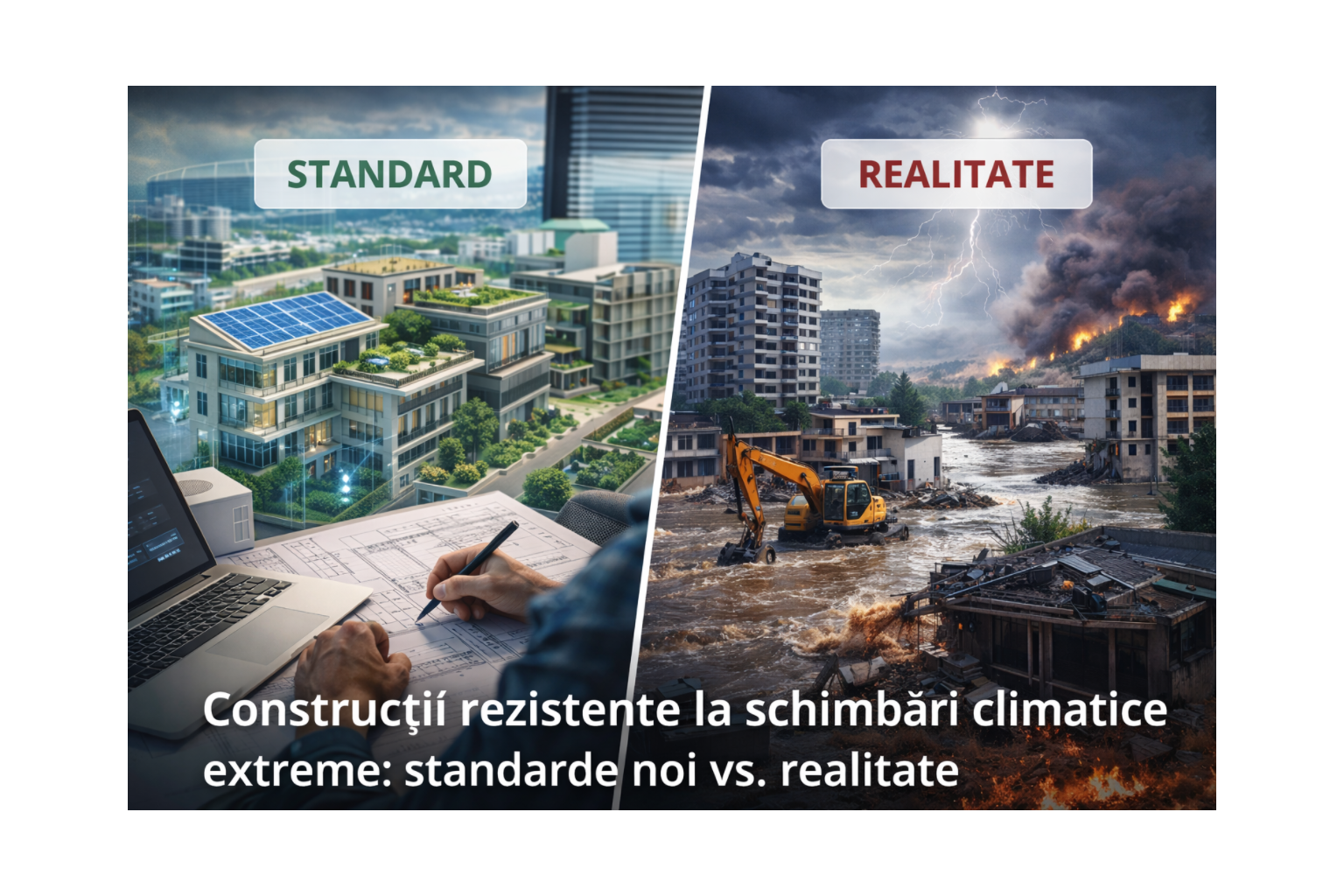
Heatwaves, intense storms, and sudden temperature variations are putting pressure on built infrastructure. In theory, new design standards include climate resilience criteria. In practice, implementation is uneven.
Many projects still rely on historical climate data rather than future scenarios. As a result, buildings completed today may become outdated in just a few years from a performance perspective.
Materials resistant to extreme temperatures, drainage systems adapted to heavy precipitation, and passive cooling solutions are becoming essential elements, not optional ones. At the same time, initial costs are increasing, and developers are hesitant to invest without legislative pressure or clear market demand.
Real change comes from integrating climate risk into urban planning: functional green areas, water retention infrastructure, building orientation, and materials with high thermal inertia.
The constructions of the future will not be only energy-efficient, but adapted to environmental instability. The difference between standards and reality will be determined by the speed at which the industry transforms climate resilience from concept into practice.
(Photo: AI GENERATED)
aflat
read