647

autor
infoConstruct
distribuie


publicat
2026 March 05
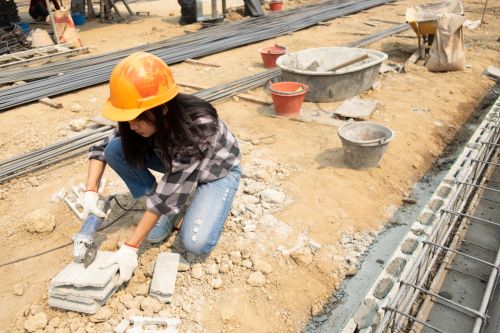
The construction industry faces two major challenges: the premature degradation of infrastructure and the high costs of maintenance. In this context, research in advanced materials is exploring an innovative solution: “living” construction materials, capable of reacting to damage and repairing their own cracks. One of the most promising technologies is bacterial concrete, also known as self-healing concrete.
The concept is based on integrating into the concrete structure bacteria capable of producing calcium carbonate. Typically, bacteria from the genus Bacillus are used, as they can survive for long periods in a dormant state within the material. When microcracks appear and water penetrates the structure, the bacteria become active and initiate a biological process through which they convert available nutrients into calcium carbonate crystals, a material that fills the crack and restores structural integrity.
The technology is the result of research developed over the past decade in European universities and materials engineering institutes. Studies indicate that bacterial concrete can seal cracks of up to approximately 0.5 millimeters, reducing water infiltration and slowing the corrosion processes of steel reinforcement.
From an economic perspective, the main advantage lies in reducing maintenance costs and extending the lifespan of constructions. Transport infrastructure, bridges or structures permanently exposed to moisture could particularly benefit from this technology, as microcracks represent one of the primary factors contributing to structural degradation.
In addition to structural benefits, self-healing materials may also contribute to reducing the climate impact of the construction sector. Concrete is responsible for a significant share of global CO₂ emissions, and extending the lifespan of structures reduces the need for major repairs or reconstruction.
Although bacterial concrete is still in a limited implementation phase, the evolution of research suggests that self-repairing materials could become an important component of future infrastructure, offering a combination of civil engineering and biotechnology.
(Photo: Freepik)
aflat
read