732

autor
infoConstruct
distribuie


publicat
2026 February 16
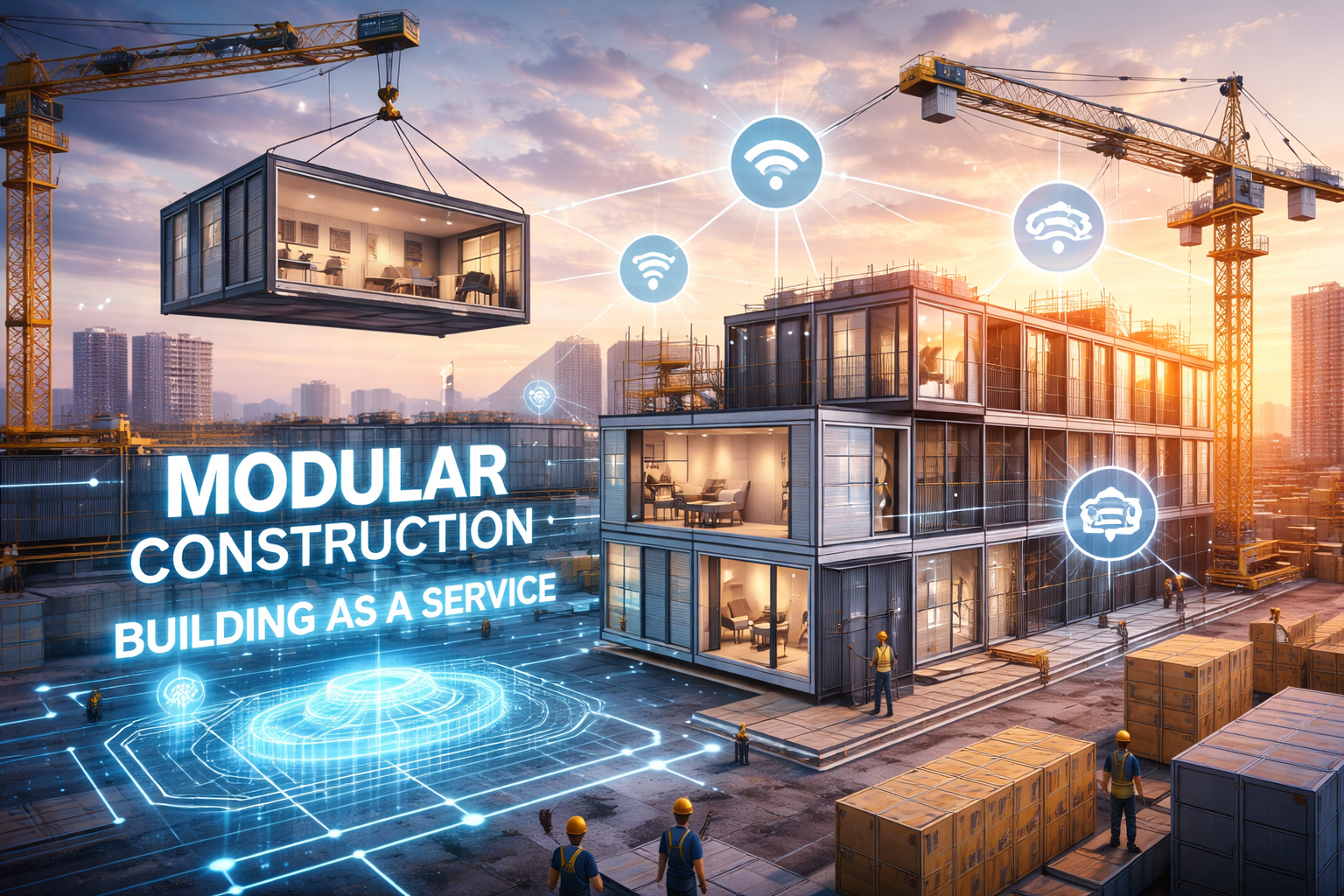
The “Building as a Service” concept is beginning to redefine how buildings are designed and used, transforming them from static products into integrated services.
The model is based on modular construction, digitalization, and long-term operation: developers no longer deliver only buildings, but complete packages that include maintenance, energy monitoring, and functional adaptation.
This model responds to the market’s need for flexibility:
spaces can be expanded or reconfigured quickly; costs are distributed over the period of use; energy performance is monitored continuously.
Digital twin, IoT, and management platforms transform buildings into dynamic systems capable of optimizing consumption and reducing operational costs.
For investors, the major advantage is revenue predictability and reduced operational risks. For tenants, the model allows access to modern spaces without major upfront investments.
In Europe, this concept is applied mainly in offices, logistics, and industrial infrastructure. In the medium term, it may become standard in large projects, where operational efficiency and flexibility are priorities.
Buildings are no longer just physical objects, but continuous services. And the market is gradually shifting from “build and sell” to “build, operate and optimize”.
(Photo: AI GENERATED)
aflat
read