792

autor
infoConstruct
distribuie


publicat
2026 February 25
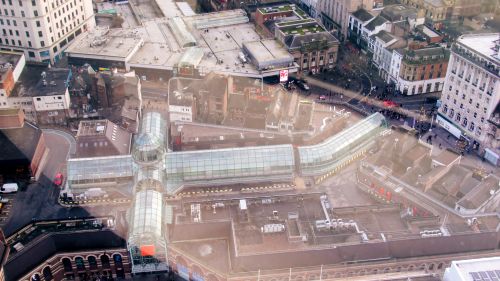
Beyond major public infrastructure projects, Romania has a parallel construction map: private sites in industry, logistics, and agri-food. These are investments that receive less media visibility, yet have a direct and rapid economic impact.
In recent years, the expansion of production capacities in the food industry, the development of regional logistics warehouses, and the modernization of large farms have generated a steady wave of private construction. Industrial halls, distribution centers, and processing units are financed mainly through private capital, bank loans, and European funds dedicated to productive investments.
These projects share several common features: short execution timelines, high technical standardization, and optimization for energy efficiency. Unlike the residential sector, where dynamics are strongly influenced by population demand, private industrial investments are correlated with clear business plans and existing commercial contracts.
The logistics sector is one of the main drivers of development, fueled by modern trade and e-commerce. At the same time, the agri-industrial sector is investing in silos, slaughterhouses, processing lines, and integrated farms.
The impact of these construction sites is multiplicative: each new unit generates jobs, demand for materials, design services, and maintenance. Although not as visible as highways or major urban projects, these private investments contribute directly to strengthening the productive base of the economy.
In 2026, the “invisible map” of private construction sites becomes a key indicator of investor confidence and of the real pace of industrialization.
(Photo: Freepik)
aflat
read