549

autor
infoConstruct
distribuie


publicat
2026 March 09
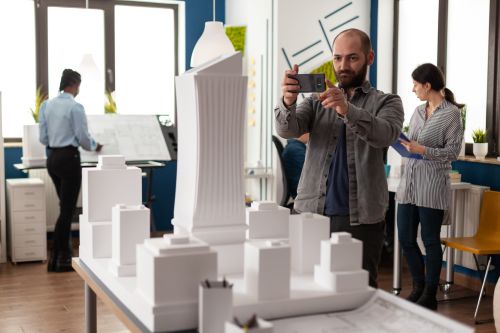
3D printing technology is beginning to find its place in the construction sector, opening the prospect of building entire neighborhoods through large-scale 3D printing. This technology uses large industrial printers capable of depositing successive layers of material—usually concrete or cement-based compounds—to create the structural elements of a building.
The process is digitally controlled, starting from three-dimensional models developed in design software. The printer deposits material layer by layer, constructing walls and certain structural components without the need for traditional formwork or a large number of workers on-site. In many cases, the basic structure of a house can be completed in just a few days.
The first projects of this type have been developed in the United States, Europe, and Asia, where construction technology companies have built individual houses and experimental residential developments. In some regions, local authorities are exploring the use of 3D printing for the rapid development of affordable housing or for the reconstruction of areas affected by natural disasters.
A major advantage of this technology is the reduction of costs and construction time. Automation allows for more efficient use of materials and reduces dependence on labor, which has become an increasingly critical factor in the construction sector. At the same time, 3D printing enables the creation of complex architectural forms that are difficult to achieve through traditional construction methods.
In addition to economic efficiency, the technology can also contribute to reducing environmental impact, as printing processes can optimize material usage and integrate alternative or recycled materials.
Although most projects are still in pilot or development stages, the rapid evolution of the technology suggests that 3D printing could become one of the key construction methods for the urban projects of the future.
(Photo: Freepik)
aflat
read