574

autor
infoConstruct
distribuie


publicat
2026 February 20
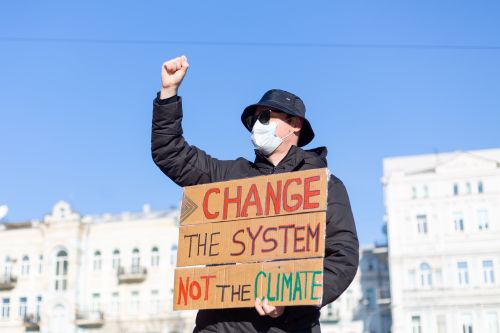
Climate change is radically reshaping the priorities of contemporary urban planning. While the past focused on comfort, mobility, and aesthetics, new realities—extreme heat waves, floods, drought, and violent storms—are driving a paradigm shift: cities must be designed for resilience.
Climate data show an increase in the frequency of extreme phenomena in Europe. In this context, urban planning increasingly includes water retention infrastructure, expanded permeable surfaces, functional green spaces, and natural ventilation corridors. The objective is no longer only quality of life, but also the reduction of systemic risks.
Buildings are being designed to withstand high temperatures through passive solutions: optimized orientation, materials with high thermal inertia, and natural shading. In flood-prone areas, regulations impose minimum construction elevations and drainage systems adapted to future climate scenarios.
This approach involves additional costs and long-term planning. However, economic analysis shows that investments in prevention are more efficient than post-disaster reconstruction.
Crisis-oriented urban planning does not exclude comfort, but subordinates it to safety. Cities of the future will be assessed not only by attractiveness indicators, but by their ability to absorb climate shocks without losing functionality.
In an era of climate uncertainty, resilience becomes the central criterion of urban development.
(Photo: Freepik)
aflat
read