1392

autor
infoConstruct
distribuie


publicat
2025 December 17
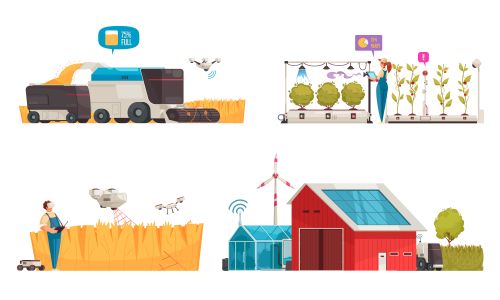
Modular processing units represent a mature technological solution for the revitalization of rural areas, yet they remain insufficiently discussed in Eastern Europe. These systems are designed as standardized food microfactories, delivered as prefabricated modules, fully equipped for the processing of milk, meat, cereals, fruits, or vegetables, with capacities adapted to local production.
In Western European countries, such units are used for primary and secondary processing: pasteurization, fermentation, packaging, and cold storage. Their major advantage is scalability. Producers can start with a basic module and subsequently add capacity, without large initial investments or conventional industrial construction.
From a technical perspective, these microfactories comply with European hygiene and food safety requirements, being designed in accordance with HACCP principles and integrated with digital monitoring systems. Energy consumption is optimized through compact equipment, short processing cycles, and, in many cases, integration with local renewable energy sources.
For rural areas, the impact is structural, not merely economic. Local processing reduces post-harvest losses, lowers logistics costs, and enables higher value added at farm level. In addition, these units facilitate compliance with market standards for artisanal or regional products, without excessively industrializing production.
In Romania, the discussion on local processing is often politicized or reduced to funding programs. In reality, the issue is one of applied technology and management. Modular units are not experimental solutions, but already validated tools that can connect primary production to the market in an efficient and sustainable manner.
(Photo: Freepik)
aflat
read