804

autor
infoConstruct
distribuie


publicat
2026 April 01
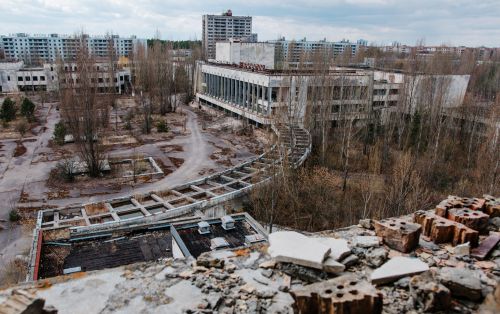
There are buildings designed to last. And there are buildings designed to disappear.
Not as a failure. Not as a loss. But as a decision.
The concept of the urban lifecycle is beginning to shift in meaning. We are no longer speaking about permanence, but about relevance. About how long a building remains useful, not how long it can physically endure.
In a rapidly transforming city, rigidity becomes a constraint. Fixed spaces turn into obstacles. And adaptability is no longer an advantage—it is a necessity.
This is where buildings designed to be abandoned emerge. Structures conceived with a defined end. With a planned exit. With anticipated disassembly.
Materials are selected for their ability to be reused. Disassembly is integrated into the design. Function is temporary by definition.
This is not an architecture of the ephemeral. It is an architecture of lucidity.
Because cities can no longer sustain long-term errors. They can no longer afford spaces that are obsolete and difficult to repurpose. They no longer have the patience for rigidity.
In this new model, abandonment is no longer an accident. It is a stage.
And the value of a building no longer lies solely in what it offers in the present, but in how elegantly it knows how to withdraw.
Because sometimes, the most intelligent building is not the one that remains, but the one that knows when to leave.
(Photo: Freepik)
aflat
read