790

autor
infoConstruct
distribuie


publicat
2026 April 01
There are resources that remain unseen. Not because they are hidden, but because their importance has not yet been fully understood. Graphene and rare earth elements belong to this category. They do not dominate public discourse. Yet, quietly, they are reshaping the global balance of construction.
Behind every smart building, every innovative material, there is a dependency. Not on design. Not on execution. But on access.
Access to those elements that cannot be easily replaced. That cannot be produced anywhere. That cannot be negotiated indefinitely.
In a world where supply chains are becoming increasingly fragile, rare materials are no longer just a technological choice. They become a geopolitical positioning. A strategic decision. At times, a vulnerability.
Construction is no longer just about space and functionality. It is about influence. About control. About who can build and who must wait.
And in this context, innovation is no longer neutral. It is conditioned. Filtered. Directed.
The industry no longer evolves linearly, but according to invisible tensions. Agreements. Constraints.
The future of construction is no longer decided solely in architectural offices or on job sites, but in silent negotiations. In state-level strategies. In access to what, until recently, seemed to be merely raw materials.
Because sometimes, the most solid structures are not those built of concrete, but those built of influence.
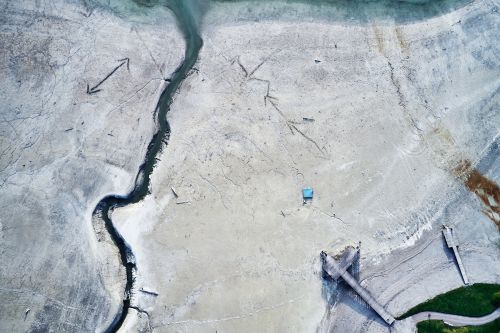
(Photo: Freepik)
aflat
read