777

autor
infoConstruct
distribuie


publicat
2025 December 10
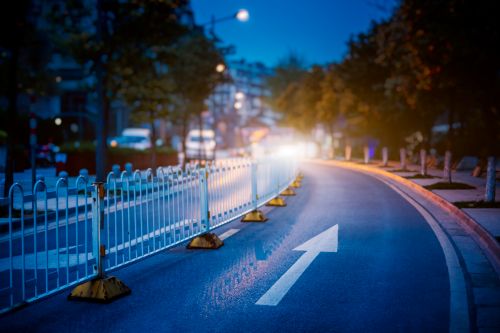
Photoluminescent paving is once again drawing the attention of European designers as an efficient solution for the passive illumination of urban walkways, bicycle lanes, and pedestrian areas. These materials absorb natural light during the day and release it gradually in the dark, without energy consumption and without additional electrical systems.
Photoluminescent pavements are produced by integrating special aggregates — typically phosphorescent pigments based on strontium aluminate — into the top layer of concrete or into the composition of prefabricated pavers. The pigments capture UV rays during the day, and at night they emit a soft light lasting 6–10 hours, sufficient for pedestrian orientation.
Advantages for urban infrastructure
- Zero energy consumption — no cables, LEDs, or electrical maintenance needed.
- Increased safety — improved visibility on sidewalks, pedestrian crossings, parks, and bicycle paths.
- High durability — pigments withstand repeated light charge–discharge cycles for over 10 years.
- Reduced costs — the initial investment is higher, but operating expenses are nearly zero.
- Modern visual impact — an aesthetic effect appreciated in urban and tourism development projects.
Where they are already used in Europe Countries such as the Netherlands, Denmark, and Poland have already introduced such solutions in pilot projects, especially for cycling routes and urban promenades. Results show a reduction in nighttime accidents by up to 15% in areas without full public lighting.
Can they be used in Romania? Yes. The technology is compatible with existing prefabricated paving systems, and several local manufacturers are already testing luminescent pigments for urban applications. Their use is ideal in:
- parks and green areas,
- pedestrian overpasses,
- bicycle lanes,
- pathways in school and university campuses,
- tourist areas with limited lighting.
Photoluminescent pavements represent a simple, efficient, and sustainable solution for cities that want to increase nighttime safety without increasing energy consumption.
(Photo: Freepik)
aflat
read