634

autor
infoConstruct
distribuie


publicat
2026 February 02
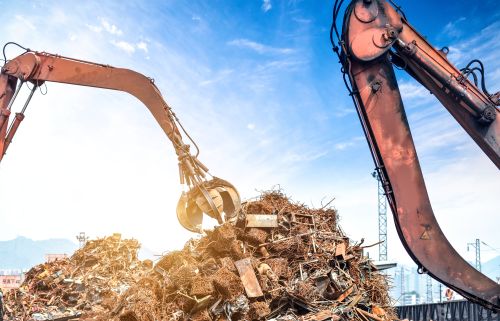
In structural design, “oversizing” is often confused with prudence. In reality, safety is not achieved through “more concrete and more steel,” but through compliance with design codes, the correct choice of calculation models, proper detailing of reinforcement and connections, and controlled execution. Modern standards—based on limit state design—do not require arbitrary strength increases; instead, they rely on partial safety factors and load combinations that introduce calibrated safety margins accounting for material uncertainties, load variability, execution errors, seismic and wind effects, and durability.
Oversizing frequently arises from practical causes: insufficient site data (lack of a robust geotechnical investigation), conservative assumptions regarding loads, simplified structural modeling, absence of checks for deformations and cracking, or fear of liability. In some cases, it is “masked” by legitimate requirements: for example, under seismic conditions, a structure must provide ductility and proper reinforcement detailing; a larger section without appropriate detailing does not automatically result in better performance.
The costs of oversizing go beyond materials alone. Increased self-weight can amplify seismic demands, require more expensive foundations, and add indirect costs related to transport, labor, time, formwork, logistics, and CO₂ emissions. Moreover, an overly massive solution can constrain architectural design and building services.
On the other hand, there are situations where “more” is justified: aggressive environmental conditions (durability), strict vibration requirements (floor systems), fire resistance, changes in use, or geotechnical uncertainties that cannot be fully eliminated. The correct conclusion is a professional one: safety results from verified design and controlled execution, while efficiency comes from optimization—not from excess.
(Photo: Freepik)
aflat
read